How We Sold Out Van Gogh Immersive in Ahmedabad at 10.68x ROAS
by Thick&Thin Media
by Thick&Thin Media | Case Studies
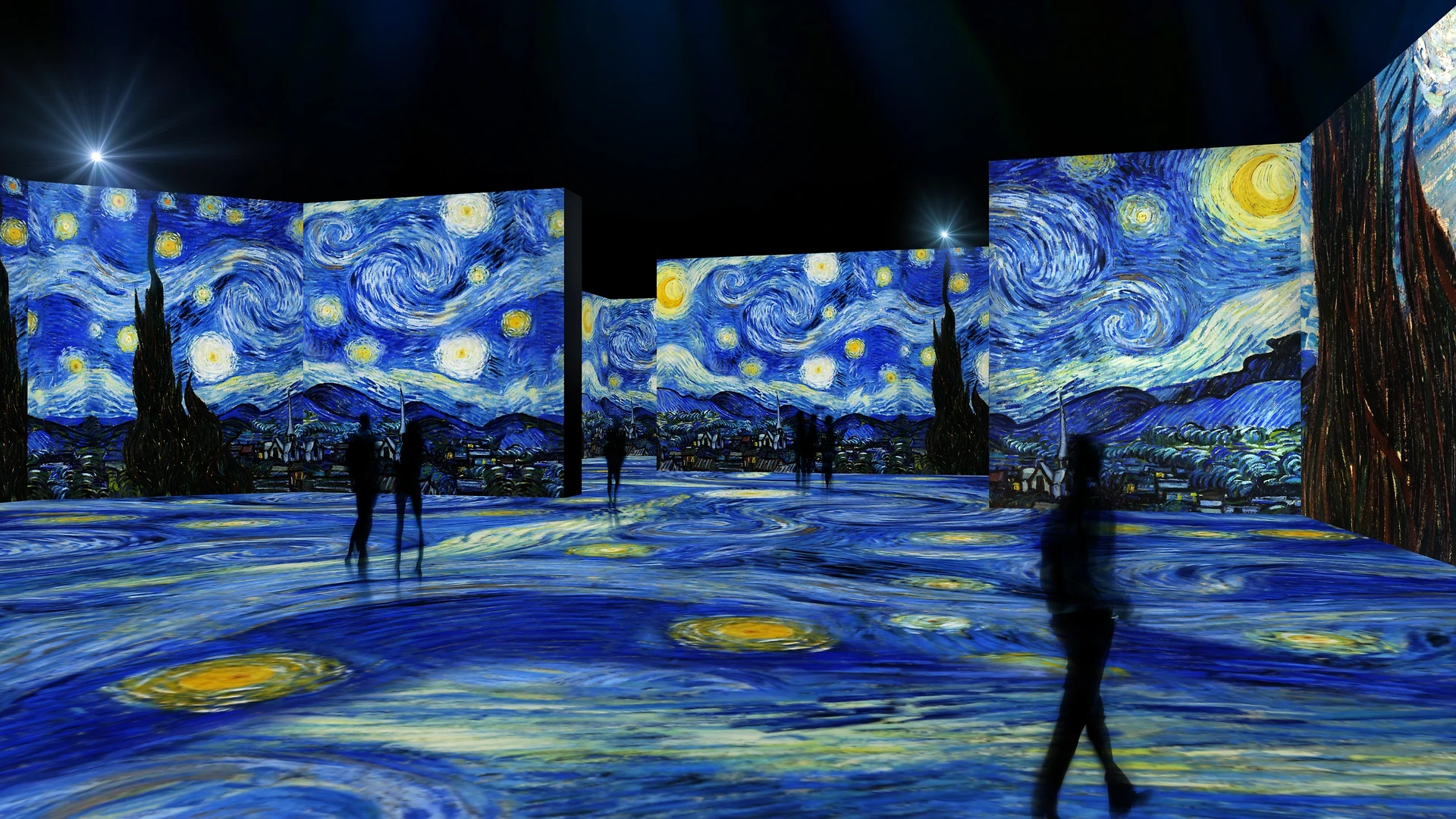
The Immersive World of Van Gogh is the world's biggest immersive event IP. It has run in New York, London, Amsterdam, Paris, Toronto, Sydney, and 50+ other cities. Tickets in those markets sell for the equivalent of ₹2,500 to ₹4,500. The brand has trained a global audience to think of immersive art as premium, photo-worthy, and worth paying for.
We were brought in to launch the IP in Ahmedabad. A Tier-1 city that had never seen an immersive event of this scale. With a ticket price that had to make sense for an Indian buyer, not a New York buyer.
We delivered 10.68x ROAS. Sold out the city. The India team did not need to take another meeting before bringing us back for Pune. Here is what we built.
THE NUMBERS
10.68x ROAS across the Ahmedabad campaign
Sold out city run
₹1Cr+ in ticket revenue
₹4L in ad spend deployed across Meta, Google, and programmatic
11,000+ ticket buyers across the run
50+ creative variations tested across 60 days
Pune edition now live, run by the same team
Like the ROAS?
THE PRICING PROBLEM A GLOBAL IP FACES IN INDIA
Van Gogh Immersive in Amsterdam costs around €20. In London, around £25. In New York, $40 to $50. The format works at those prices because the audience has been conditioned to value the product. Immersive art is something you pay for, dress up for, and post about.
In India, the conditioning is different. ₹2,000 for a ticket to an art exhibition is a Sotheby's-tier ask. The Indian buyer does not have a reference price for immersive art because most Indians have never been to one. Charge the global price and you lose the audience. Charge too low and you signal cheap, which kills the premium IP positioning the brand spent years building.
The pricing window we had to operate inside was tight.
We priced the Ahmedabad at a under-₹1000. That gave us a price point Indian buyers could justify, while keeping enough headroom in the bundle structure to protect the premium positioning.
The campaign was built to translate the global product into Indian buyer logic. Not by lowering the brand. By rebuilding the offer around how Indians actually buy experiences.
We've got more
WHAT WE ACTUALLY DID
Translated the global brand assets into Indian buyer language. The international Van Gogh creative leaned art-historical: gallery aesthetics, classical music, sweeping camera pans. In India, that signals "exhibition" not "experience." We rebuilt the creative around what Indians scroll for. Crowd reactions, Indian-ized context, testimonials, UGC content, Ahmedabad-focused ad visuals.
Built a ~90-day creative engine: A typical event runs 8 to 12 ad creatives over its full window. We ran 30+ across Ahmedabad. Different angles for date couples, families, art lovers, photographers, college students, and corporate buyers. Each segment got its own message, its own visual, its own offer. Meta's algorithm did the optimization. The creative volume gave it room to work.
Used global proof to build local trust. Van Gogh Immersive sold 5 million tickets globally before reaching India. We treated that as the strongest credibility signal in the funnel. Landing pages led with the global numbers. Influencer activations referenced the Amsterdam and New York editions. The buyer was not buying an art show. They were buying access to a global
THE OFFER WE BUILT
A premium IP at an India price needed an India-specific offer structure. We built four buying paths into the same campaign:
General admission for the curious first-timer at the lowest price barrier
Weekend premium at a higher tier with timed entry, positioned as the "right way to see it"
Group bundles for friends, families, and date pairs, where the per-person price dropped meaningfully
Corporate and school packages sold direct, not through the public funnel
Most events in India sell one ticket type and discount it when sales lag. That trains the audience to wait. We sold four ticket types from day one, each with its own creative angle, each targeting a different buyer reason. The price never moved. The offer architecture did the work.
The 10.68x ROAS came from this. Not from cheap clicks or aggressive retargeting. From an offer structure that let every buyer self-select into the bundle that matched how they wanted to attend.
We'll build your offers
Let's build
THE PLAYBOOK FOR YOUR EVENT
If you are launching an IP in a new market, scaling a brand across cities, or pricing a global product for an Indian audience, the work is offer architecture before it is advertising. The Ahmedabad campaign worked because the offer was right. The ads only had to deliver people to it.
If you are running a multi-city tour, scaling an IP, or translating a global product into India, this is the work.
The Immersive World of Van Gogh is the world's biggest immersive event IP. It has run in New York, London, Amsterdam, Paris, Toronto, Sydney, and 50+ other cities. Tickets in those markets sell for the equivalent of ₹2,500 to ₹4,500. The brand has trained a global audience to think of immersive art as premium, photo-worthy, and worth paying for.
We were brought in to launch the IP in Ahmedabad. A Tier-1 city that had never seen an immersive event of this scale. With a ticket price that had to make sense for an Indian buyer, not a New York buyer.
We delivered 10.68x ROAS. Sold out the city. The India team did not take another meeting before bringing us back for Pune. Here is what we built.
THE NUMBERS
10.68x ROAS across the Ahmedabad campaign
Sold out city run
₹1Cr+ in ticket revenue
₹4L in ad spend deployed across Meta, Google, and programmatic
11,000+ ticket buyers across the run
50+ creative variations tested across 60 days
Pune edition now live, run by the same team
THE PRICING PROBLEM A GLOBAL IP FACES IN INDIA
Van Gogh Immersive in Amsterdam costs around €20. In London, around £25. In New York, $40 to $50. The format works at those prices because the audience has been conditioned to value the product. Immersive art is something you pay for, dress up for, and post about.
In India, the conditioning is different. ₹2,000 for a ticket to an art exhibition is a Sotheby's-tier ask. The Indian buyer does not have a reference price for immersive art because most Indians have never been to one. Charge the global price and you lose the audience. Charge too low and you signal cheap, which kills the premium IP positioning the brand spent years building.
The pricing window we had to operate inside was tight.
We priced the Ahmedabad at a under-₹1000. That gave us a price point Indian buyers could justify, while keeping enough headroom in the bundle structure to protect the premium positioning.
The campaign was built to translate the global product into Indian buyer logic. Not by lowering the brand. By rebuilding the offer around how Indians actually buy experiences.
THE OFFER WE BUILT
THE OFFER WE BUILT
A premium IP at an India price needed an India-specific offer structure. We built four buying paths into the same campaign:
General admission for the curious first-timer at the lowest price barrier
Weekend premium at a higher tier with timed entry, positioned as the "right way to see it"
Group bundles for friends, families, and date pairs, where the per-person price dropped meaningfully
Corporate and school packages sold direct, not through the public funnel
Most events in India sell one ticket type and discount it when sales lag. That trains the audience to wait. We sold four ticket types from day one, each with its own creative angle, each targeting a different buyer reason. The price never moved. The offer architecture did the work.
The 10.68x ROAS came from this. Not from cheap clicks or aggressive retargeting. From an offer structure that let every buyer self-select into the bundle that matched how they wanted to attend.
A premium IP at an India price needed an India-specific offer structure. We built four buying paths into the same campaign:
General admission for the curious first-timer at the lowest price barrier
Weekend premium at a higher tier with timed entry, positioned as the "right way to see it"
Group bundles for friends, families, and date pairs, where the per-person price dropped meaningfully
Corporate and school packages sold direct, not through the public funnel
Most events in India sell one ticket type and discount it when sales lag. That trains the audience to wait. We sold four ticket types from day one, each with its own creative angle, each targeting a different buyer reason. The price never moved. The offer architecture did the work.
The 10.68x ROAS came from this. Not from cheap clicks or aggressive retargeting. From an offer structure that let every buyer self-select into the bundle that matched how they wanted to attend.
We'll build your offers
Speak with us for your event
Book a Call
WHAT WE ACTUALLY DID
Translated the global brand assets into Indian buyer language. The international Van Gogh creative leaned art-historical: gallery aesthetics, classical music, sweeping camera pans. In India, that signals "exhibition" not "experience." We rebuilt the creative around what Indians scroll for. Crowd reactions, Indian-ized context, testimonials, UGC content, Ahmedabad-focused ad visuals.
Built a ~90-day creative engine: A typical event runs 8 to 12 ad creatives over its full window. We ran 30+ across Ahmedabad. Different angles for date couples, families, art lovers, photographers, college students, and corporate buyers. Each segment got its own message, its own visual, its own offer. Meta's algorithm did the optimization. The creative volume gave it room to work.
Used global proof to build local trust. Van Gogh Immersive sold 5 million tickets globally before reaching India. We treated that as the strongest credibility signal in the funnel. Landing pages led with the global numbers. Influencer activations referenced the Amsterdam and New York editions. The buyer was not buying an art show. They were buying access to a global
WHAT WE LEARNED ABOUT LAUNCHING GLOBAL IPs IN INDIA
The Indian buyer needs more reasons than the global buyer. A Londoner sees Van Gogh Immersive and the brand alone is enough. An Indian buyer needs the brand, the price logic, the social proof, the photo proof, and the date-night angle to convert. More creative angles. More buyer paths. Same conversion outcome.
Pricing is positioning, but offer architecture is conversion. The single most expensive mistake we see global IPs make in India is single-tier pricing. One price for everyone reads as either too high or too cheap, depending on the buyer. Tiered offers let every buyer feel they got the right deal.
Sold-out cities sell the next city. Once Ahmedabad ran out of tickets, every piece of marketing for it became proof for the next edition. The campaign did not end on event day. It became the launch asset for what came next.
THE PLAYBOOK FOR YOUR EVENT
If you are launching an IP in a new market, scaling a brand across cities, or pricing a global product for an Indian audience, the work is offer architecture before it is advertising. The Ahmedabad campaign worked because the offer was right. The ads only had to deliver people to it.
If you are running a multi-city tour, scaling an IP, or translating a global product into India, this is the work.